DOCUMENT ASSURANCE FOR PROFESSIONAL SERVICES
Quicker review of technical reports
Better margins, consistent quality.
WHAT QRTR REVIEWS
Engineering Reports
Get expert time back to billable work. Senior engineers focus on professional judgment while requirements, standards, citations, and formatting get verified automatically. Consistent quality regardless of time pressure or reviewer availability.
Audit Reports
Check every audit against the same protocol, on every engagement. Workload and auditor no longer change the standard applied. ISQM 1 documentation builds as you work. Deviations surface before the file closes and inspection begins.
Commissioned Reports
Know whether you got what you paid for, before sign-off. Qrtr checks consultant deliverables against your brief and the standards they cite, in minutes. Accept with confidence, or reject with evidence. Your own staff stay on the work only they can do.
THE PROBLEM
Stop reviewing reports like it's 1999
Documents are being produced faster than ever, but quality decisions still depend on limited senior capacity.
Invisible Risk
AI accelerates production but not quality control. Errors reach clients before anyone catches them. One mistake can cost a contract.
Wasted Expertise
Your most expensive people are the review bottleneck. Every hour spent on systematic checking delays sign off and kills margin.
Poor Records
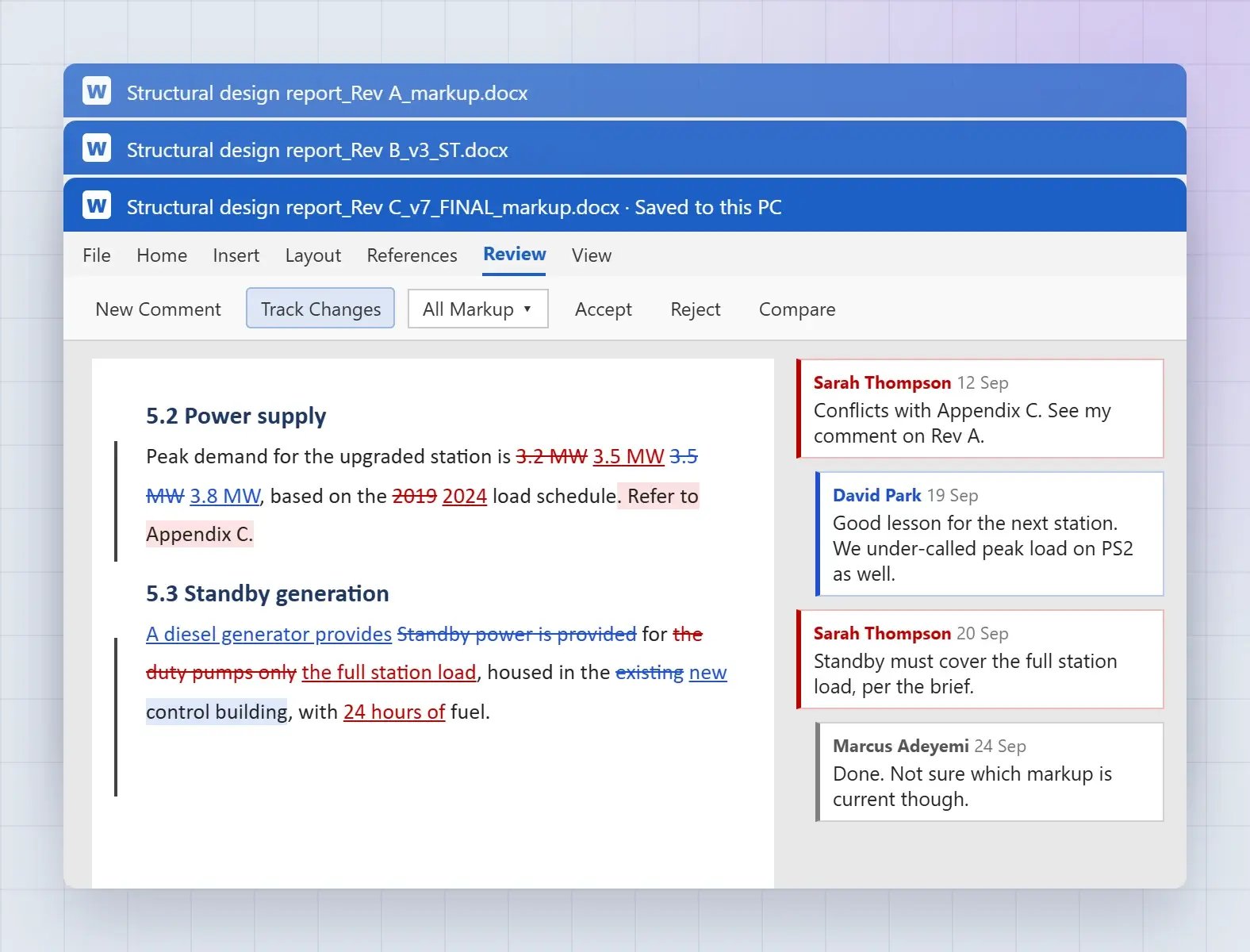
Tracked changes get accepted and disappear. Comments get resolved and vanish. A Word document with comment threads is a poor audit trail.
All three have the same root cause. Nowhere in the process is "good" actually defined.
INTRODUCING QUALITY PROFILES
Your standards, your rules, applied every time
Qrtr does not guess what "good" looks like. Quality Profiles encode your organisation's standards, policies, rule sets and requirements into structured decision logic. Review learnings are fed back in a Quality Profile improvement loop, so good gets better.
ASSISTANCE VS ASSURANCE
Why not just use ChatGPT, agents or Co-pilot?
LLMs and agents can check documents but they can't provide the controls, consistency and audit trail that professional services require.
ONE PROFILE - THREE PRODUCTS
The same standard applied every time
QRTR FIX - FOR AUTHORS & CREATORS
Fix issues before review
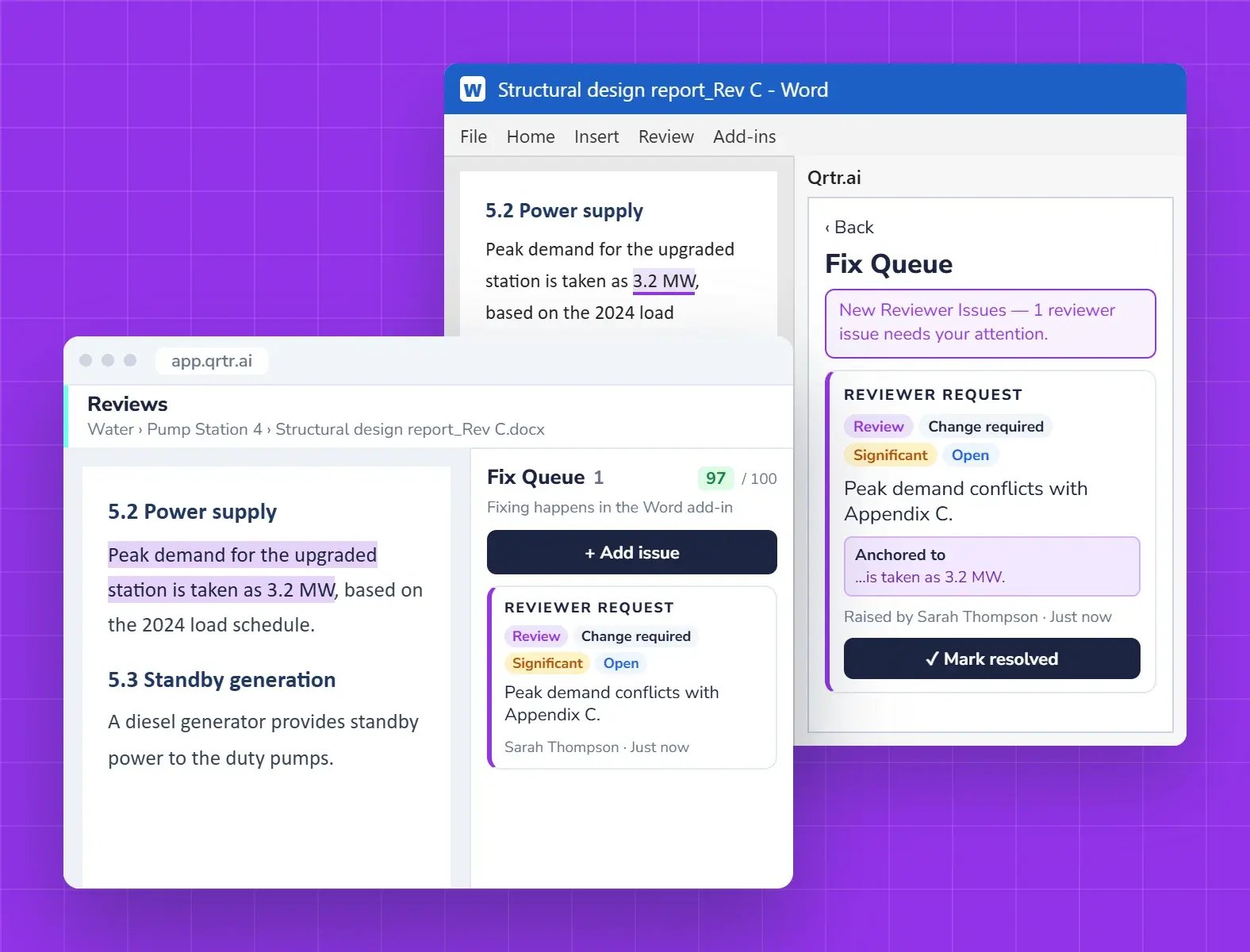
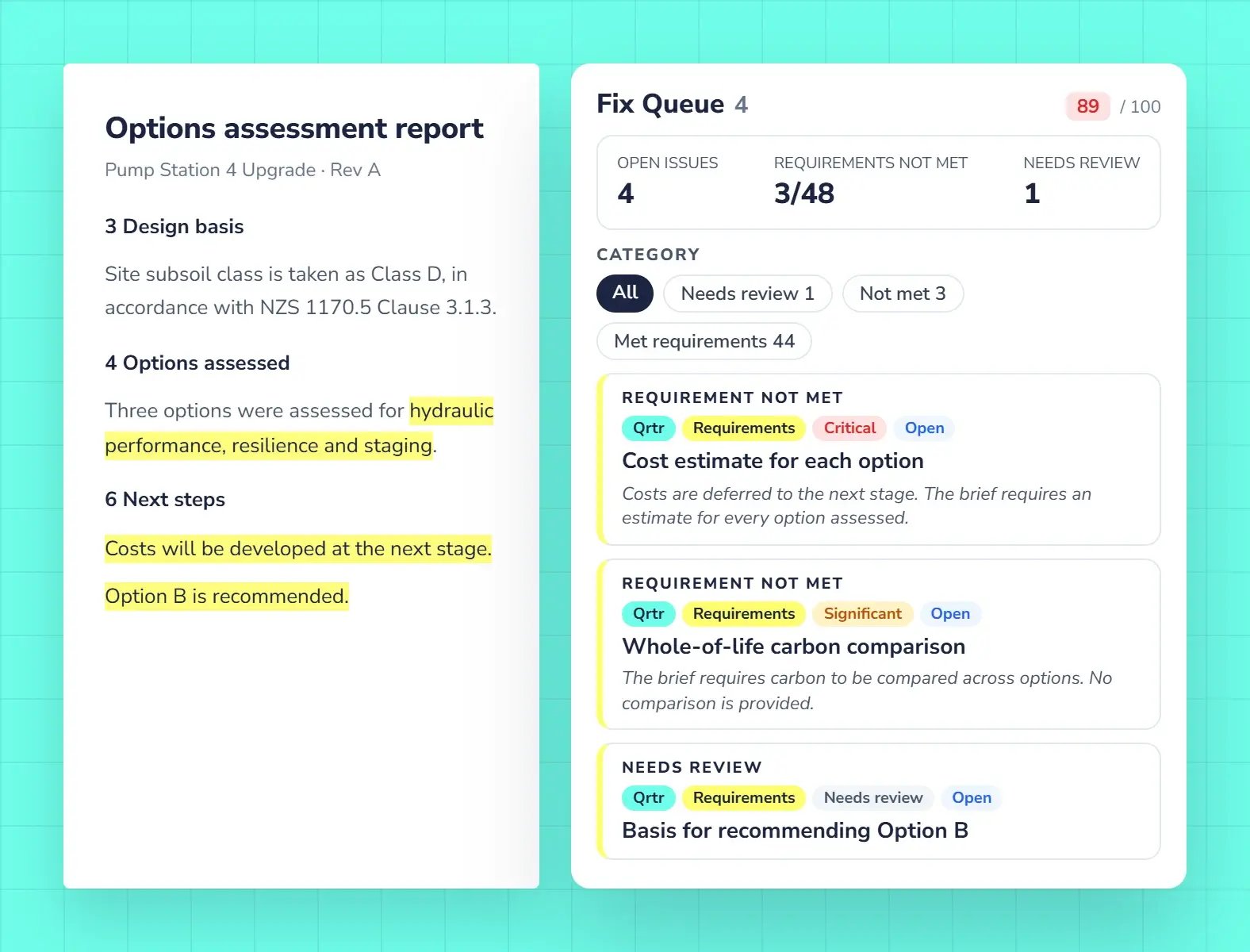
Qrtr Fix works inside Microsoft Word, checking documents against requirements, standards, and protocols. Auto-fixes where possible, surfaces everything else in a structured fix queue. Send clean versions for review with an audit-ready issue register.
QRTR REVIEW - FOR REVIEWERS & APPROVERS
Professional review, reinvented
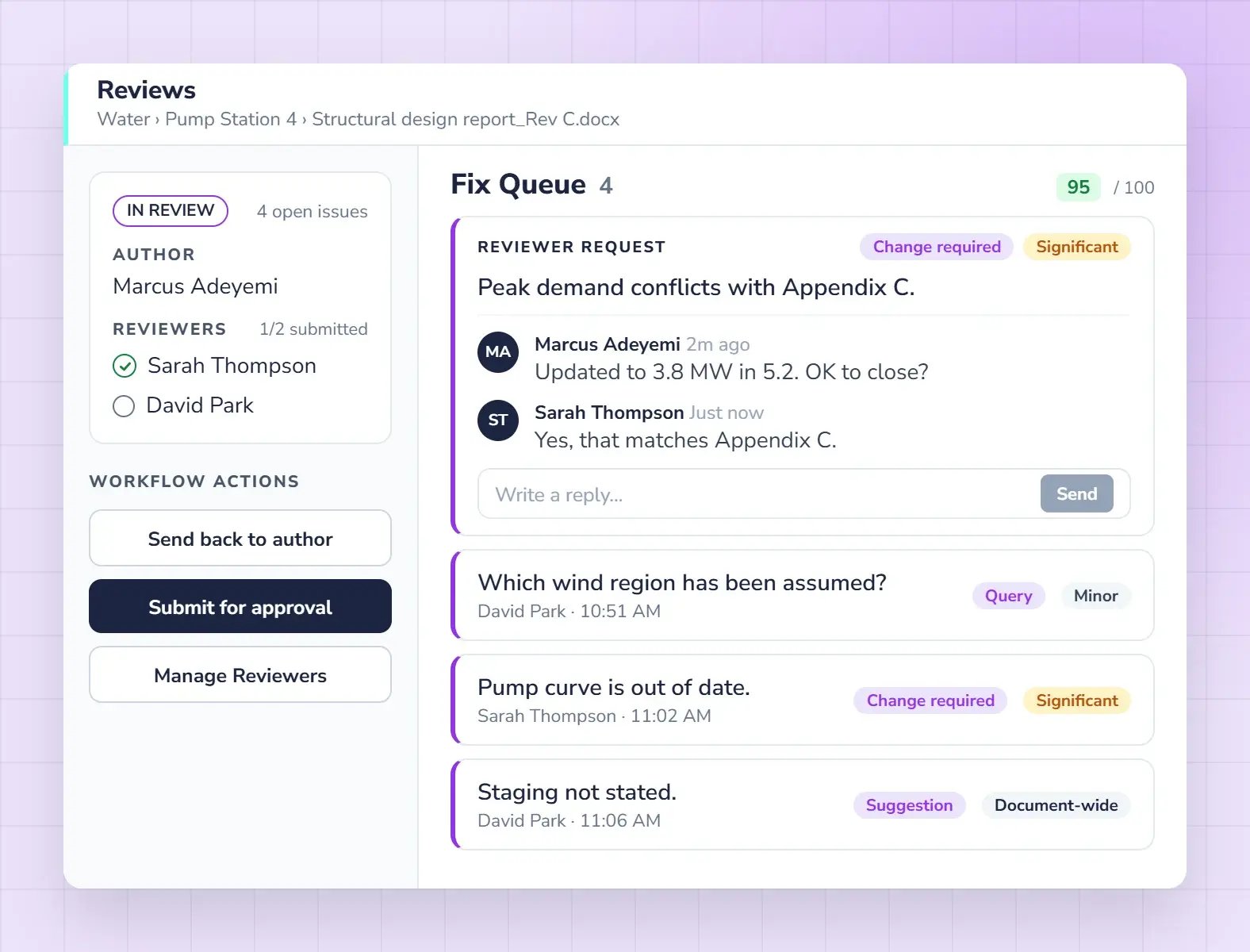
Clean browser interface with no tracked change noise. Read clearly, add findings anchored to specific text or document-wide, push straight to the fix queue. Your judgment matters; systematic checks are already done.
QRTR CHECK - FOR FAST DECISIONS
Instant pass/fail assessment
Upload a document and get systematic checking against requirements and standards in seconds. Clear structured report showing all identified issues and Met/Not Met findings. Use it for incoming submissions, pre-review screening, or final sign-off checks.
BUILT FOR PROFESSIONAL SERVICES
Works with your existing workflow
Built on secure, SOC2 aligned infrastructure that meets the highest standards for professional services
FAQs
Qrtr is a document quality assurance platform for professional services firms. It checks reports, proposals and other deliverables against the brief, cited references, reasoning and quality requirements, and records every result in an audit trail for sign-off. Qrtr produces evidence. Reviewers and approvers make the decisions. It runs in the browser and inside Microsoft Word.
AI document review assesses a document against a defined set of quality requirements rather than reading it the way a person would. Qrtr checks each requirement, citation and claim individually, records what was met, what was not and why, and presents the findings for a human reviewer to act on. The reviewer decides. The system supplies the evidence.
Yes. Qrtr assesses a deliverable against the requirements in the brief, RFP or scope of work and reports each requirement as met or not met, with the supporting evidence from the document. This catches missed requirements before the client does, which is where most rework and reputational cost comes from.
No. Qrtr handles the systematic checking that consumes senior review time: requirements coverage, citation accuracy, internal consistency, unsupported claims. Reviewers then spend their time on professional judgement, which no software should be making for them. Every human decision in Qrtr is explicit, attributed and recorded.
A deterministic check returns the same result every time it runs on the same content. That matters in professional services because a quality decision you cannot reproduce is a quality decision you cannot defend. Qrtr is built so identical content produces identical results, and every assessment is bound to a specific document version and quality profile so the result can be re-examined later.
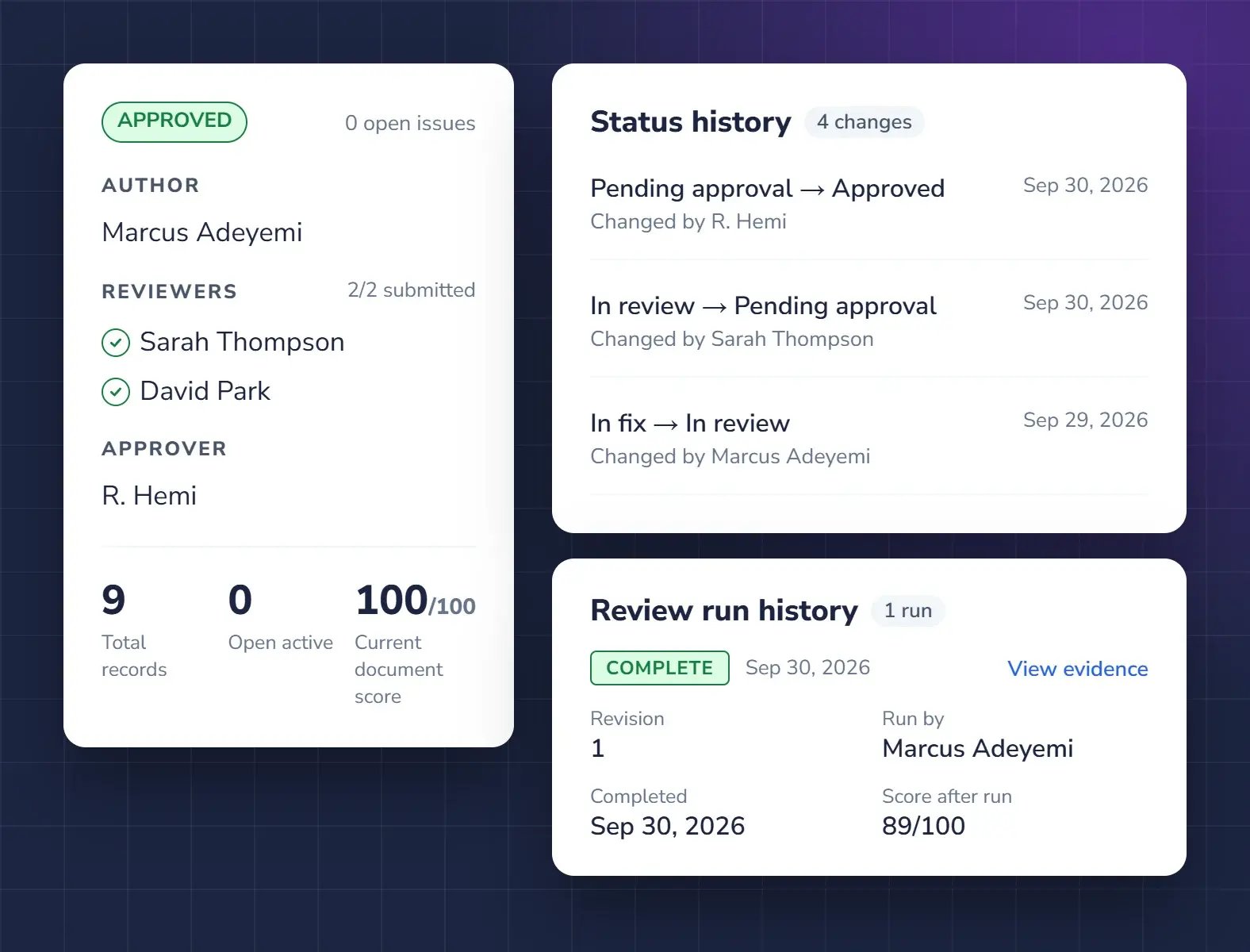
Record everything, and bind every result to what produced it. Each Qrtr assessment is tied to a specific document version and a snapshot of the quality requirements in force at the time. Every finding, human decision and override is logged with who made it and when. If a deliverable is questioned a year later, the full assessment history is there.
Grammarly checks grammar and Copilot generates content. Qrtr verifies content. It checks a deliverable against the brief, the cited standards and its own internal reasoning, then records the results for review and sign-off. Generation tools made drafting faster and left the review burden where it was. Qrtr exists for the review burden.
Four things. Requirements: whether the deliverable addresses what the brief or scope demands. References: whether citations to standards and sources are accurate. Reasoning: whether claims are supported, consistent and free of contradiction. Style: placeholders, inconsistent terminology and structural drift. Each finding names the passage, the problem and the severity.
Because generation moved faster than verification. Drafting a report got quicker, checking one did not, so the review load concentrated on the most senior and most expensive people in the firm. AI review tools like Qrtr take on the systematic checking so senior engineers review judgement, not formatting and cross-references.
Yes, that is the firm Qrtr is built for. At that size a consultancy has real review obligations and real sign-off risk but no dedicated quality team to absorb them. Qrtr gives those firms a repeatable review process with an audit trail, without adding headcount or a heavyweight quality management system.